

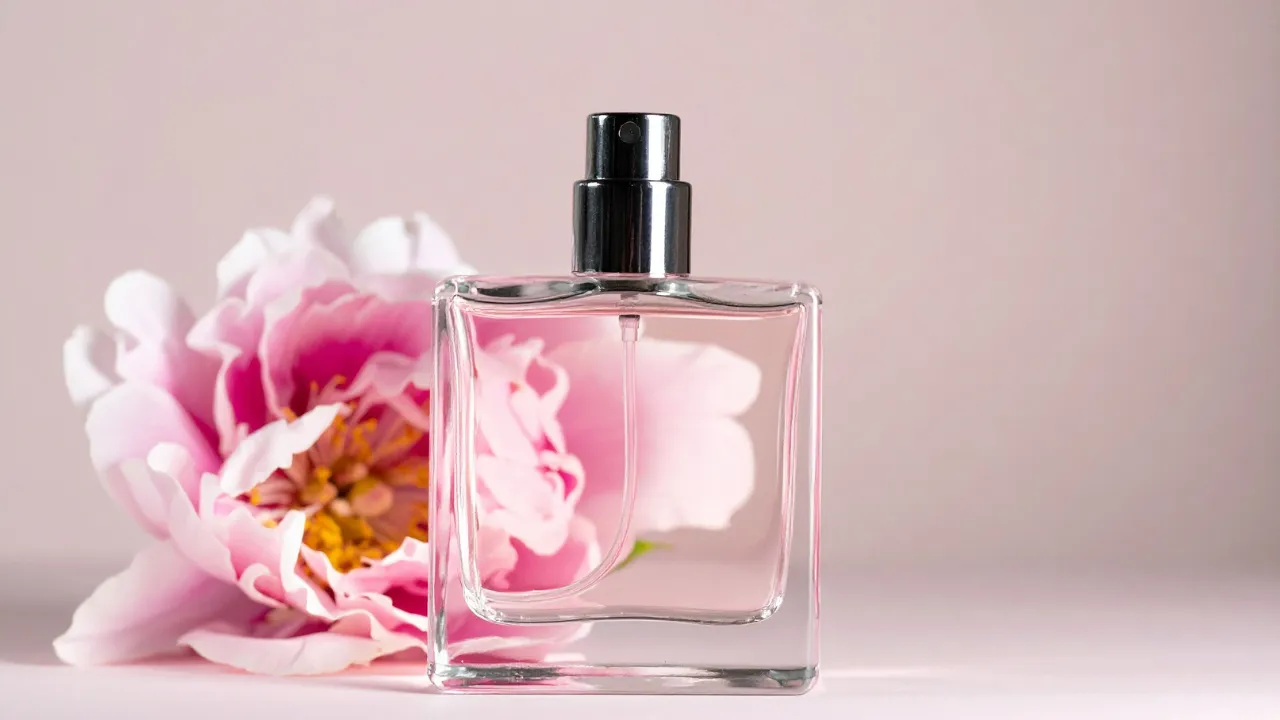
A batch of neroli-heavy EDP, £60 worth of raw materials, and a result that smelled like a hospital corridor. Wrong alcohol. Wrong dilution order. A cap that did not seal. Three separate problems that had nothing to do with the formula itself — and none of them are obvious until something goes wrong.
Perfume making has a reputation for being approachable, and at its core it is. But the gap between a batch that works and one that disappoints almost always comes down to process details that get glossed over: the exact alcohol grade, the mixing sequence, the rest period, the bottle neck diameter relative to the cap type, and how the finished product is stored and packaged. Get those right and the creative side takes care of itself. Miss them and even a well-balanced formula will underperform. What follows covers concentration ratios with exact ml breakdowns, the fragrance note structure that actually holds on skin, a spill-safety reference for bottle and cap selection, and the packaging decisions — inserts, box shape, bulk specifications — that protect the work once it leaves the bench.
Step One: Decide What Type of Perfume You Are Making
Before a single millilitre is measured, the concentration type needs to be established. This is the decision that controls everything downstream — how much fragrance oil to buy, how long the formula needs to rest, how long it will last on skin, and what kind of bottle and applicator make sense.
Here is the full reference with working numbers:
| Type | Fragrance Oil % | Alcohol % | Water % | Typical Batch (ml) | Longevity on Skin | Rest / Maceration Time |
|---|---|---|---|---|---|---|
| Parfum / Extrait | 20–40% | 60–80% | 0–5% | 10–30 ml | 8–12 hours | 4–6 weeks |
| Eau de Parfum (EDP) | 15–20% | 75–85% | 0–5% | 30–50 ml | 5–8 hours | 3–4 weeks |
| Eau de Toilette (EDT) | 8–15% | 80–90% | 5–10% | 50–100 ml | 3–5 hours | 2–3 weeks |
| Eau de Cologne (EDC) | 3–8% | 70–80% | 10–15% | 100–200 ml | 2–3 hours | 1–2 weeks |
| Body Mist / Splash | 1–3% | 50–70% | 15–30% | 100–250 ml | 1–2 hours | 3–5 days |
Critical point on alcohol: The only correct choice is perfumer’s alcohol — ethanol at 190–200 proof (95–99.5% purity). Using 70% isopropyl or standard vodka is the single most common cause of that sharp, chemical top note that beginners mistake for a bad formula. The formula is usually fine. The solvent is the problem.
The Exact ml Breakdown for a 30 ml Batch
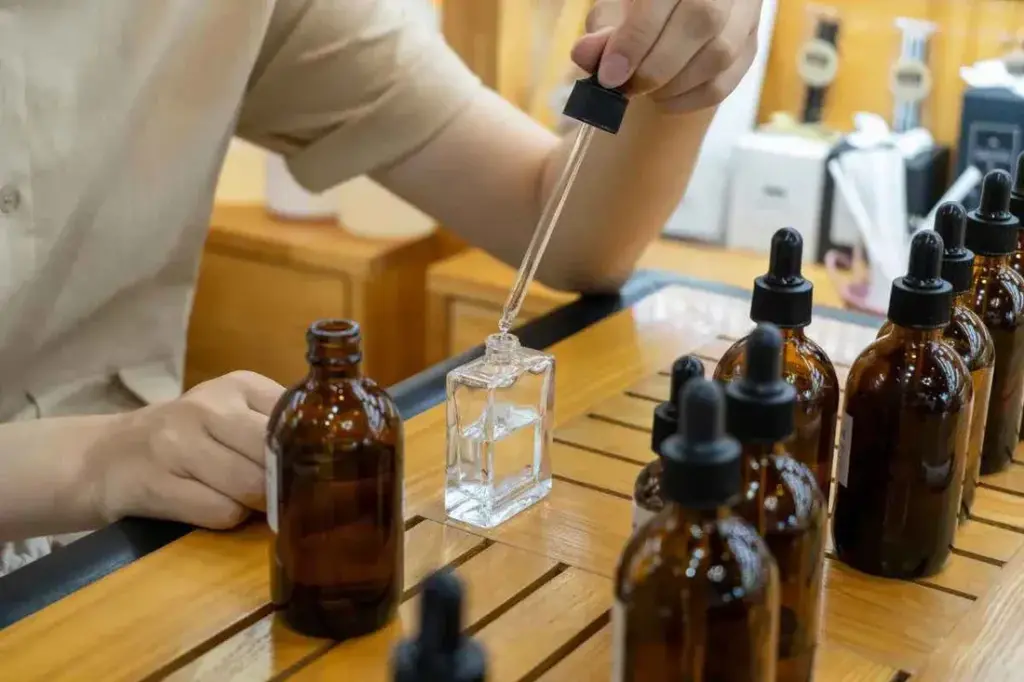
Working from percentages while holding a dropper over expensive materials is a reliable way to make errors. The table below removes that problem. A 30ml batch is the most practical test size — large enough to evaluate properly on skin across multiple days, small enough that a formula failure is not a significant material loss.
| Fragrance Type | Fragrance Oil (ml) | Perfumer’s Alcohol (ml) | Distilled Water (ml) | Total (ml) |
|---|---|---|---|---|
| Parfum / Extrait | 9 ml (30%) | 21 ml (70%) | 0 ml | 30 ml |
| Eau de Parfum | 5.1 ml (17%) | 23.4 ml (78%) | 1.5 ml (5%) | 30 ml |
| Eau de Toilette | 3.3 ml (11%) | 24.3 ml (81%) | 2.4 ml (8%) | 30 ml |
| Eau de Cologne | 1.5 ml (5%) | 24 ml (80%) | 4.5 ml (15%) | 30 ml |
| Body Mist | 0.6 ml (2%) | 18 ml (60%) | 11.4 ml (38%) | 30 ml |
Mixing order matters: Always add the fragrance oil into the alcohol first. Stir gently for 30 seconds until fully combined, then add distilled water last. Adding water before the oils are properly dissolved causes cloudiness — and in some oil combinations, a permanent separation that no amount of shaking will resolve. The sequence is not a preference. It is chemistry.
Once mixed, seal the bottle, label it with the date and formula name, and store it upright in a dark space at room temperature. The maceration period is when the individual ingredients stop smelling like themselves and begin behaving as a unified formula. Cutting this period short is the second most common reason a promising formula disappoints on skin.
Building the Formula: The Note Pyramid in Practice
The top, heart, and base note structure is real and important — but the way it is typically explained makes it sound more abstract than it needs to be. Here is the practical version.
Top notes are the first impression — what is detected in the opening 5 to 15 minutes. They are light, volatile, and they evaporate quickly. Heart notes are the identity of the fragrance — the dominant character that defines how it is remembered. Base notes are the slow foundation, the dry-down that lingers on fabric and warm skin hours after application.
| Note Layer | % of Total Oil Volume | Common Ingredients | Evaporation Time | Role in Formula |
|---|---|---|---|---|
| Top Notes | 20–30% | Bergamot, lemon, pink pepper, grapefruit, basil, lime | 5–15 minutes | Opening impression |
| Heart Notes | 50–60% | Rose, jasmine, ylang ylang, geranium, neroli, lavender, iris | 30 minutes – 3 hours | True character and identity |
| Base Notes | 20–30% | Sandalwood, oud, musk, amber, vanilla, vetiver, cedarwood, patchouli | 3–12+ hours | Dry-down, longevity, memory |
The most consistent beginner mistake is over-weighting top notes because they smell extraordinary directly from the dropper. On skin, those same top notes disappear within fifteen minutes — leaving a formula without a proper transition into the heart, sitting on an unbalanced base with no middle. Anchor the formula in the heart notes. The top notes provide the opening; the heart is what the perfume actually is.
A reliable evaluation method: smell the blend on a strip at 5 minutes, 30 minutes, 2 hours, and 6 hours. If the formula does not hold character across all four points, the balance needs adjustment before it is locked.
The Bottle Cap Problem That Silently Destroys Good Batches
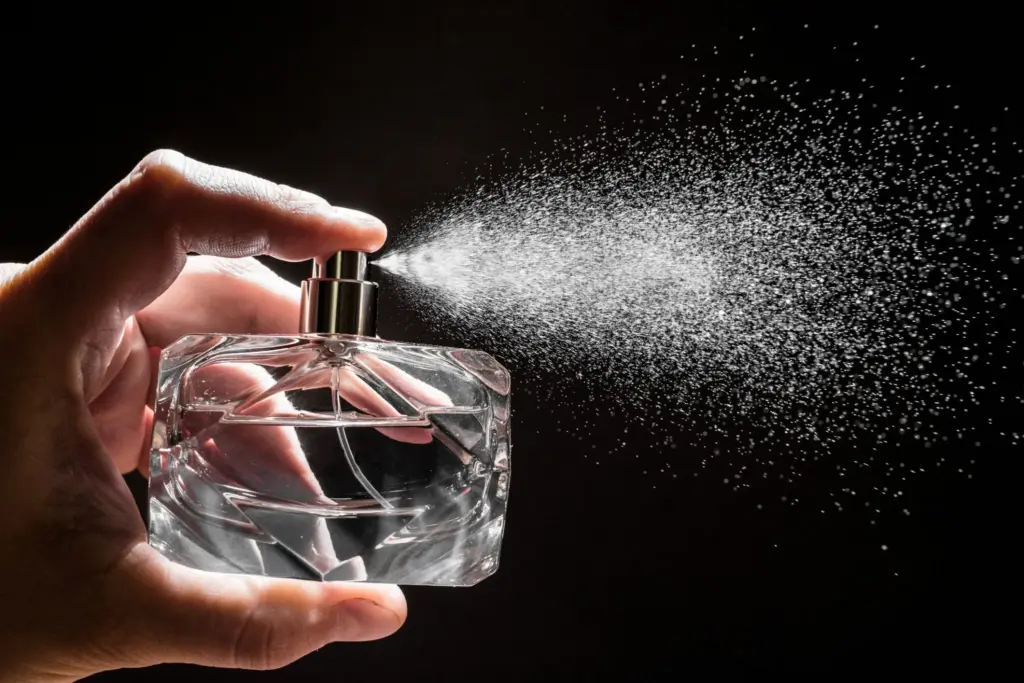
A well-made formula stored in the wrong bottle loses its top notes to evaporation within weeks — sometimes before the maceration period is even complete. This happens because the cap-to-neck seal is inadequate, and with alcohol-heavy formulas, the vapour pressure inside the bottle pushes continuously against any gap.
Three bottles of a finished EDP, stored on their sides in a dark drawer, with caps that looked adequate but were not creating an airtight seal against the neck diameter. Result: 30% product loss in three weeks, and a noticeably shifted scent profile. The formula had not changed. The storage had failed it.
Here is the cap-to-neck compatibility reference that should be checked before any bottle is purchased or filled:
| Bottle Neck Diameter | Recommended Cap / Applicator | Seal Quality | Spill Risk (Upright) | Spill Risk (On Side) | Best For |
|---|---|---|---|---|---|
| 13 mm (FEA 13) | Fine mist spray pump + overcap | Excellent | Very Low | Low (pump blocks flow) | EDTs, body mists |
| 15 mm (FEA 15) | Crimped spray pump + overcap | Excellent | Very Low | Low | EDPs, standard formats |
| 18 mm | Screw cap with inner liner | Good (liner is essential) | Low | Medium (without liner: High) | Parfum / extrait, oil-based |
| Roll-on / Roller Ball | Press-fit roller ball + cap | Very Good | Very Low | Very Low | Oil-based perfumes, travel |
| Wide Mouth / Splash | Screw cap with foam or rubber liner | Medium | Low | High — avoid horizontal storage | Cologne splashes, body oil |
For test batches and development phases, roller ball bottles are the most practical choice. Zero spill risk during handling, controlled application for proper skin testing, and significantly slower product use — meaning a 10 ml development bottle lasts far longer than the same volume in a spray. Once the formula is finalised, transfer to a crimped spray format for presentation or production.
Storage rule: always store perfume bottles upright. Even a correctly sealed bottle experiences greater internal pressure against the cap when laid on its side. Heat and direct sunlight accelerate vapour loss and degrade the fragrance itself. Dark, stable-temperature storage with all bottles vertical is the minimum condition for any formula worth keeping.
Packaging That Protects What the Formula Earned
Packaging is not decoration added after the real work is finished. For any perfume that will be gifted, sold, or stored beyond immediate use, the packaging is a functional requirement — and the wrong choices will physically damage the product.
Safety Inserts: The Most Overlooked Protective Element
A safety insert is the foam, cardboard, or moulded pulp component inside the outer box that holds the bottle in a fixed position. Without it, the bottle moves during transit. The cap absorbs impact. The seal weakens. With alcohol-based perfumes, a loosened seal means evaporation loss even when the outer box looks completely undamaged.
The insert must be sized to the specific bottle — not to a generic shape. The relevant dimensions are: base diameter, maximum width at the shoulder (the widest point of the bottle body), and total height including the cap. A bottle sitting loosely in an insert that does not match those measurements is receiving almost no real protection. When ordering custom packaging boxes, always provide all three dimensions and request either a die-cut cardboard tray or an EVA foam insert cut to size.
Box Shape Should Follow Bottle Shape
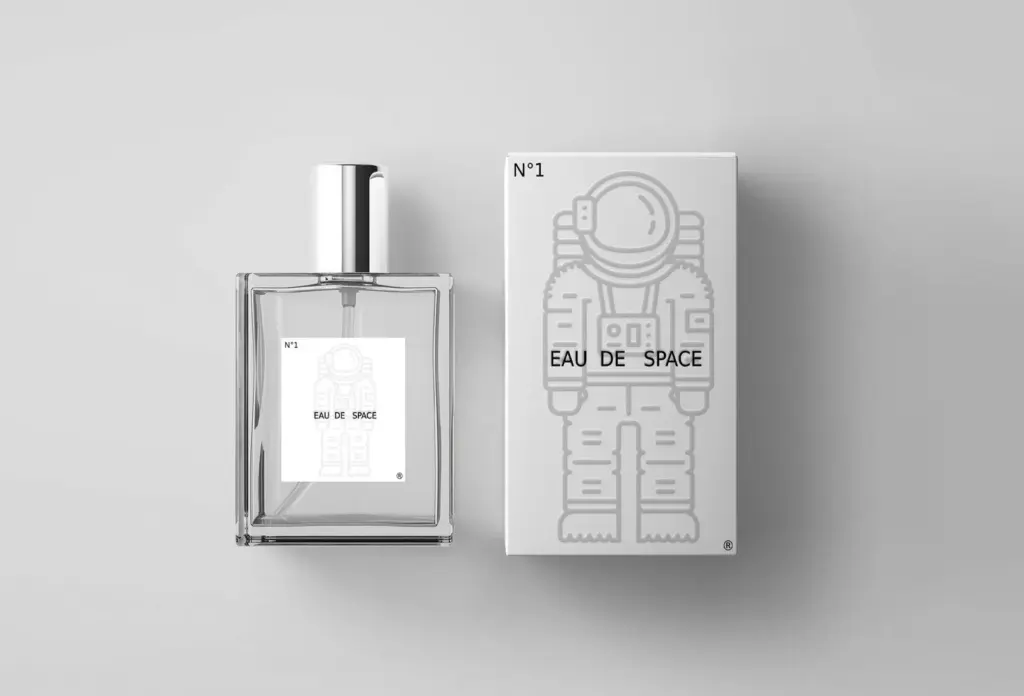
A standard rectangular box works for rectangular or flat bottles. For anything else, the shape mismatch creates a problem at both the protective and the aesthetic level.
- Cylindrical bottles need a cylindrical tube box, or a square outer box with a matching cylindrical foam channel. Without the channel, the bottle rotates inside the box continuously during any movement.
- Oval and irregular bottles require a moulded pulp or custom foam insert that supports both the base and the shoulder. The shoulder is where most transit damage occurs.
- Flat, rectangular bottles sit well in standard rigid boxes with a simple two-piece cardboard tray insert.
- Tall, narrow bottles create leverage when the box allows even small internal movement. Match box height closely to bottle height — excess vertical space is not neutral, it allows tilting and amplifies the force of any lateral impact during shipping.
Presentation at Any Budget Level
Even for small personal batches, the presentation communicates whether the formula inside was made seriously. A rigid outer box, tissue paper around the bottle, and a small card with the fragrance name and blend date takes ten minutes and changes the entire experience of receiving the product.
For commercial or gift-grade presentation, the standard entry point for luxury-adjacent packaging is: a two-piece rigid box with magnetic closure lid, an EVA foam insert cut to bottle shape, and a branded outer sleeve. Rigid boxes absorb impact. Folding carton boxes transmit it directly to the product. For glass bottles, this distinction is material.
On finish: matte lamination with soft-touch coating pairs well with frosted or opalescent glass. UV gloss coating reads better against clear or coloured glass. This affects how the combined package is perceived on first contact — before the bottle is removed from the box, before the cap comes off.
Scaling Up: From Test Batch to Bulk Production
When a formula is consistent enough to move beyond the development phase — from 30 ml test batches toward 50, 100, or 500 unit runs — the process requires some important adjustments that are not obvious from small-batch work alone.
Batch Scaling Is Not Simple Multiplication
Some fragrance materials — particularly heavy base note components like oud resin, civet, or castoreum — behave disproportionately at scale. A concentration that is balanced at 30 ml can become overpowering at 300 ml in a way that small-batch testing does not predict. The reliable approach is to scale in 3x increments — 30 ml to 90 ml to 270 ml — evaluating and adjusting at each stage before committing to a full production run.
Bulk Perfume Box Manufacturing: Key Specifications
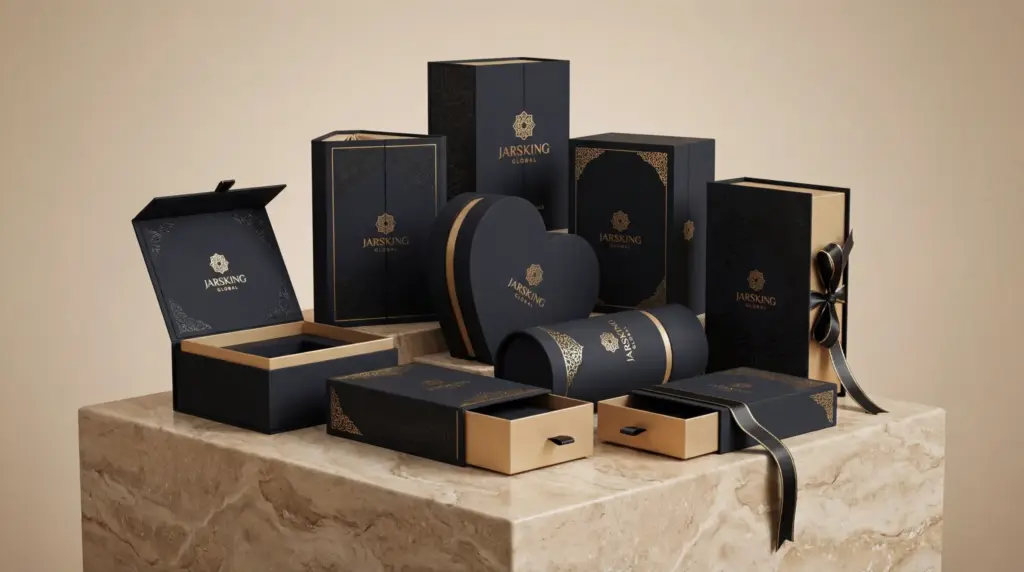
Empty perfume box manufacturing typically operates with minimum order quantities of 100 to 500 units for printed rigid boxes, and 50 to 200 units for unprinted or stock options. At these quantities, specification accuracy becomes critical. Errors that are invisible at 5 units become expensive across a full run.
- Provide exact bottle dimensions — base width, shoulder width (maximum), total height with cap on, and material type. A 1–2 mm error in insert sizing across 500 units is 500 units of inadequate protection.
- Request a pre-production physical sample before approving any full run. No reputable manufacturer will refuse this. No buyer should skip it regardless of schedule pressure.
- Specify insert foam density — for liquid bottles being stored or shipped stacked, EVA foam at 60–80 kg/m³ density is the correct specification. Standard polyfoam compresses permanently under repeated loading and loses its protective function over time.
- Confirm the box-to-bottle fit at sample stage, not after production. An insert that looks correct on a spec sheet occasionally reveals a clearance issue or a friction problem when the actual bottle is placed inside. That is what samples exist to catch.
The perfume box is the first physical experience of the product. The bottle is the second. The scent is the third. All three need to be working at the same standard — a formula that took weeks to develop deserves packaging that protects and presents it at the same level.
Pre-Batch Checklist: Before Starting Any New Formula
- ✅ Concentration type confirmed — correct ml ratios pulled from reference table
- ✅ Perfumer’s alcohol sourced at 95–99.5% purity — not vodka, not isopropyl
- ✅ Formula structure covers top, heart, and base — heart notes at minimum 50% of oil volume
- ✅ Fragrance oil added to alcohol first — water added last after full dissolution
- ✅ Batch sealed and stored upright in a dark, stable-temperature space for full maceration period
- ✅ Bottle neck diameter confirmed — cap type selected to match and verified for airtight seal
- ✅ Screw cap on 18 mm+ neck — inner liner confirmed present
- ✅ Storage position: upright only
- ✅ Box insert sized to actual bottle dimensions — not approximate or generic
- ✅ If scaling up — formula evaluated at 3x increments, not jumped directly to production volume
Closing Note
The failures that happen in perfume making are almost never about instinct or creativity. They are almost always about process — the wrong alcohol, incorrect ratios, a cap that does not seal, storage that lets the formula degrade before it is ever used. Fix the process and the creative work takes care of itself.
A good formula deserves to be stored correctly, presented properly, and — when it reaches other people — packaged in a way that reflects the standard of what is inside. Every element from the measuring stage to the box finish is part of the same product. All of it matters.